
Gaming is all about creating worlds that stay with you.
A successful game has a recognisable name, a distinctive atmosphere, and often characters capable of taking on a life beyond the game itself. Mario, Sonic, Lara Croft and Pikachu are clear examples. We have previously explained how such game characters can be protected in various ways: through copyright, design law, and trademark law.
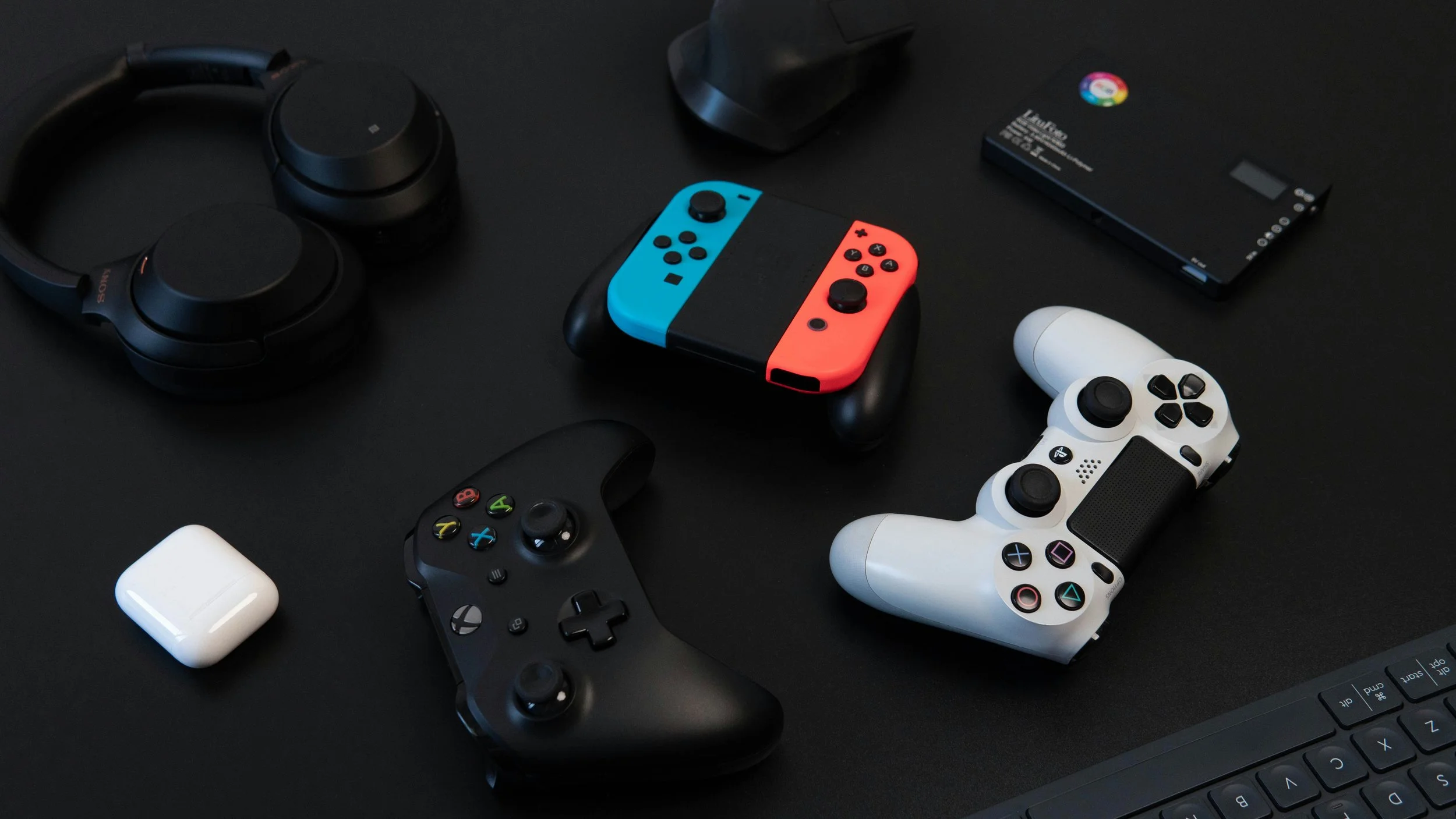
These rights coexist, but they require a carefully considered strategy. After all, value in gaming is rarely concentrated in one place. Distinctive features may lie in the names of the game and its characters, its logos, visual appearance, and character design, and increasingly in everything sold around it. A game or console often gives rise to an entire product ecosystem: controllers, headsets, charging stations, grips, screens, docking stations, special editions, packaging and accessories. It is this wider product world that we want to highlight in this blog. Gaming products are not merely by-products. To players, they are recognisable parts of the same brand experience. The controller in your hand may feel just as familiar as the logo on the screen. It is therefore hardly surprising that the major market players take a broad approach to protection. Sony has registered, among others, PlayStation, DualSense, DualSense Edge, and DUALSHOCK as trademarks. The familiar PlayStation symbols on the controller–square, circle, triangle, and cross–are also part of this recognisable visual language and are registered trademarks. Nintendo follows a similar approach with names and shapes relating to consolers and controllers, from Joy-Con to Wii Remote. And for Xbox, it is not only the Xbox name that matters, but also its green color scheme, controller designs, icons and other brand elements that together shape the overall brand experience.
The continuing relevance of these forms of protection is illustrated by two recent European applications filed by Sony Interactive Entertainment for the shape of game controllers. The applications were filed on 10 June 2026, are still under examination and cover, among other things, computer accessories, game controllers, and controllers for game consoles. The applications show the controller form from several angles. That makes sense, because a shape mark does not focus on a word or logo, but on the shape itself. The question is therefore whether the public can perceive that shape as a sign identifying a single commercial origin.
This is also where the legal tension lies. Obtaining trademark protection for a three-dimensional product shape is far from straightforward. Consumers must perceive the shape as a trademark, rather than as the customary or practical shape of the product. For controllers, this is particularly sensitive. Buttons must be within reach, sticks must be positioned logically and the controller must sit comfortably in the hand. The more a shape is dictated by technical considerations or ease of use, the more difficult it becomes to monopolise that shape through trademark law. This does not mean that protection is impossible, but the chosen route must fit precisely what is to be protected.
That is why design law often deserves a place alongside trademark law in the gaming sector. A design protects the appearance of a product, such as the design of a controller, console, headset, or accessory. This can be particularly useful in a market where look and feel carry significant value. Trademarks remain important for names, logos, and shapes that genuinely function as indications of origin. But anyone active in gaming would be wise to look beyond the title of the game or the name of the console. Commercial value also lies in the surrounding products: in what players hold, connect, wear, and recognize. That is precisely where protection can make the difference.
Author: Arnaud Bos
Bio: Arnaud is trademark attorney and within Knijff responsible for the marketing & communication. Arnaud is specialist in the metaverse and music sectors and his client portfolio includes many upcoming and renowned bands. He keeps a close eye on the latest case law in the EU and will let you know when he sees remarkable applications.