
Sneaky Sneakers part 2: Converse strikes back… or not?
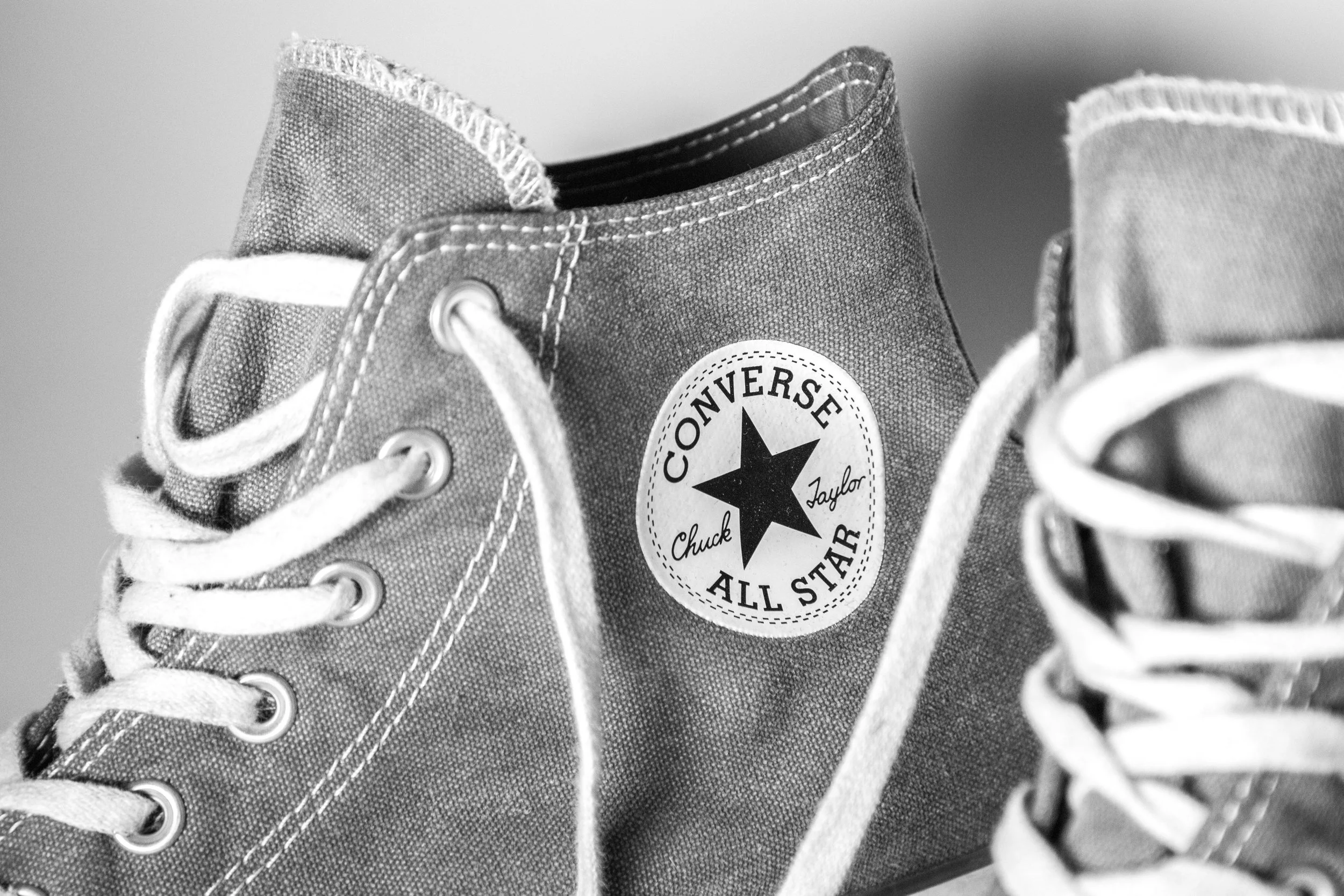
Do you remember Converse’s opposition to the trademark application for the circle on the ankle of a shoe with “CEBO” inside it?
A circle on the ankle of a shoe… A that does sound suspiciously like All Stars, doesn’t it?
The European Union Intellectual Property Office (EUIPO) gave the parties time to see whether they could reach a settlement. As that did not happen, the EUIPO Opposition Division has now issued its decision.
As to the question whether the signs were sufficiently similar, the following is relevant. According to the EUIPO, the shape applied for consisted largely of common sneaker features: a lace-up shoe, ventilation holes, stripes, a rubber sole and a round patch. Such elements are not distinctive in themselves and therefore carry less weight in the comparison.
What remains, then, are the elements that can function as indications of origin. In the shoe applied for, that was above all the word CEBO, which was clearly visible on the round patch and the insole. In the earlier Converse marks, by contrast, distinctiveness lay in the combination of the words CONVERSE, CHUCK TAYLOR and ALL STAR, together with the star in the round patch. Because, according to the EUIPO, the similarities were mainly found in non-distinctive or banal shoe features, while the distinctive elements clearly differed, the signs were not considered sufficiently similar visually, phonetically or conceptually. Without similarity between the signs, not only the claim based on likelihood of confusion fails, but also the claim based on reputation.
So bad luck for Converse. For practice, it is worth bearing in mind that where a shape mark is registered and clearly shows a brand name or logo, it is mainly that brand name or logo that is protected. In other words, such marks tend above all to have a deterrent effect, unless the trademark owner can show, through evidence, that the shape itself has acquired distinctiveness and has become established in the market, which is often difficult to prove.
The owner of a successful product with distinctive design features is therefore in a difficult position. Following the MIO judgment of the Court of Justice, reliance on copyright is likely to be possible only in cases where a product contains clear creative elements. For utilitarian products, that protection will apply only in limited situations. If that owner also has no design registration, a shape mark is the only remaining route. But that route is not easy either, because such a shape mark will often only be accepted if it stands out or includes a trademark. This means that, when launching products with distinctive design features, design registration becomes crucial.
Author: Erwin Haüer
Bio: Erwin is a trademark attorney and, as the managing partner, in charge of IT and Information Management. He works extensively with startups and scale-ups, while his clientele also includes numerous multinational corporations. Erwin possesses a sharp wit and a keen eye for remarkable trademark news and curious brand infringements.