
Clever idea? Birkenstock + Havaianas = Birkaianas?
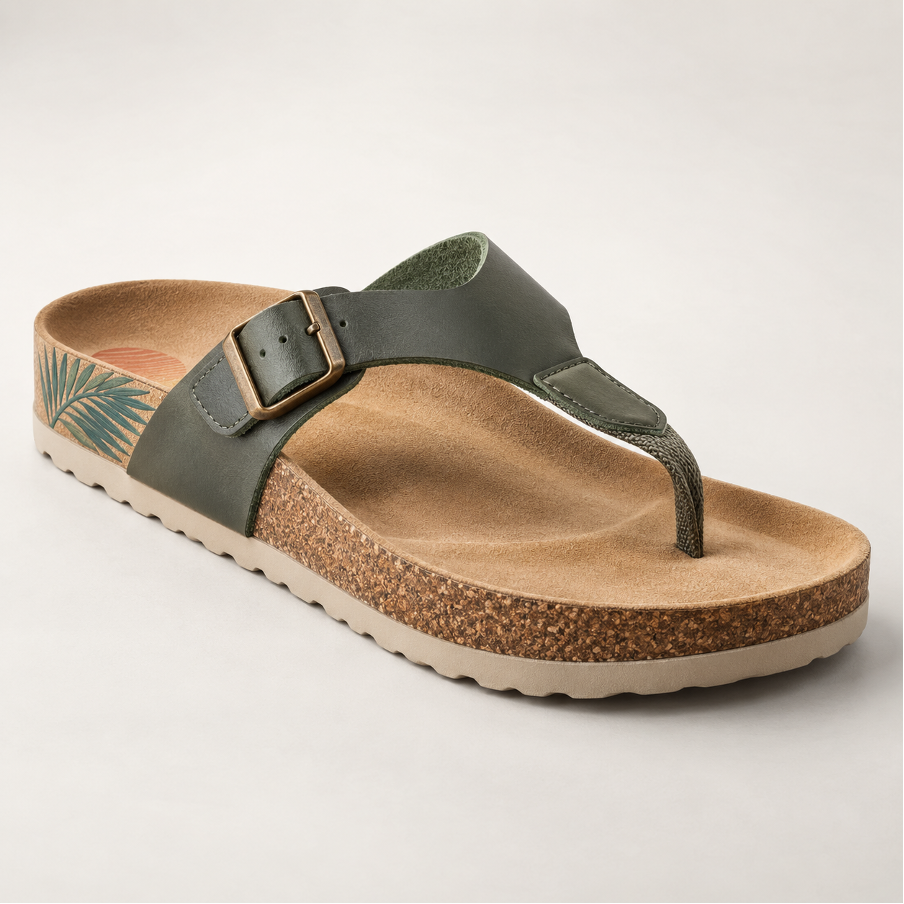
This image was generated using AI
‘Birkaianas’ sounds as though Birkenstock and Havaianas have had a love child and created a new shoe model together. What would that shoe look like?
We can only ever guess. Both brands filed opposition proceedings against the Bulgarian party that sought to register Birkaianas as a trademark in the European Union. Interestingly, the two oppositions produced entirely different outcomes.
Birkenstock based its opposition on the earlier word mark BIRK and argued that there was a likelihood of confusion. Despite the identical goods, the European Union Intellectual Property Office (EUIPO) found that the marks, taken as a whole, were insufficiently similar. BIRK consists of four letters, whereas BIRKAIANAS has ten and has a clearly different sound and rhythm. According to the EUIPO, the fact that the first four letters were identical was not enough to establish a likelihood of confusion. Birkenstock’s opposition was therefore rejected in its entirety.
For Havaianas, the outcome was different. The trademark owner, Alpargatas, was able to demonstrate that HAVAIANAS is, at least in Spain, a well-known trademark for flip-flops. The EUIPO therefore considered not only likelihood of confusion, but above all the broader protection afforded to reputed marks. BIRKAIANAS and HAVAIANAS share the distinctive ending ‘-aianas’ and are used for identical or closely related goods. According to the EUIPO, consumers are therefore likely to make a link between the two marks. The applicant for BIRKAIANAS could consequently benefit from the reputation, image and commercial appeal that Havaianas has built up over the years. This amounts to taking unfair advantage of the reputation of the earlier mark. The BIRKAIANAS application was therefore ultimately refused in its entirety.
The two decisions neatly illustrate how the same trademark application can be assessed very differently depending on the legal basis relied upon. For likelihood of confusion, a shared beginning such as BIRK is not automatically sufficient, even where the goods are virtually identical. A reputed mark, by contrast, may enjoy much broader protection where a later mark creates sufficient associations and may derive a commercial benefit from them.
For trademark owners, there is an important strategic point here. An opposition is not only about identifying which earlier mark most closely resembles the application, but also about choosing the right legal basis. Birkenstock relied solely on likelihood of confusion. Havaianas was also able to invoke its reputation and, in doing so, target precisely the element of BIRKAIANAS that stands out most. For reputed marks, that broader protection can therefore make the difference between an unsuccessful opposition and an application being blocked in its entirety.
Author: Arnaud Bos
Bio: Arnaud is trademark attorney and within Knijff responsible for the marketing & communication. Arnaud is specialist in the metaverse and music sectors and his client portfolio includes many upcoming and renowned bands. He keeps a close eye on the latest case law in the EU and will let you know when he sees remarkable applications.