
De 9 Straatjes: one street too far
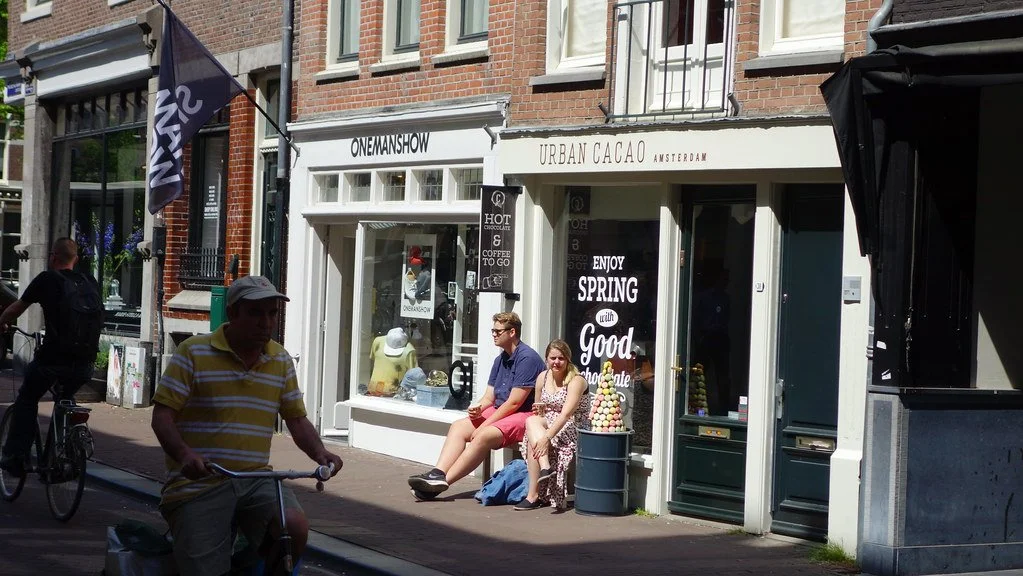
© Photo Rosa G
The De 9 Straatjes (9 Streets) name will be familiar to anyone who has spent time in Amsterdam.
It refers to the well-known shopping area in the city center, home to boutiques, cafés and galleries. For years, the entrepreneurs’ association behind this neighborhood held an EU trademark for DE 9 STRAATJES, registered for a wide range of services in classes 35, 41 and 45. That registration was recently put to the test when a local company applied for revocation based on non-use.
The Cancellation Division of the European Trademarks Office (EUIPO) initially revoked the mark in its entirety, and the First Board of Appeal has now confirmed that outcome. Central to the case was the question whether the sign was genuinely used as a trademark for the registered services during the relevant five-year period. The association submitted a large set of materials: website screenshots, social media posts, flyers, invoices and internal documents. Much of this showed activity around promoting the neighborhood and coordinating its members, but that turned out not to be enough.
When assessing use, a trademark office or court looks at four fixed criteria: whether that use took place within the relevant period, in the relevant territory, the nature of this use (use as a trademark and use in relation to the registered services) and the extent of this use.
The Board took a close look at the nature of that use. In its view, De 9 Straatjes was mainly used as the name of a geographical area and as a collective label for the neighborhood, rather than as an individual trademark indicating the commercial origin of specific services. The activities relied on as proof of use were largely internal, aimed at members of the association, and not offered outwardly to third parties in the course of trade. For most of the broadly worded services on the registration, there was simply no concrete evidence of genuine market use.
An interesting side note was the association’s argument that the revocation request was filed in bad faith, as part of a broader dispute between local businesses. The Board brushed this aside. In revocation proceedings based on non-use, an applicant does not need to show a specific interest. The wider public interest prevails: the EU trademark register should not be cluttered with marks that are not actually used.
For brand owners this decision is a clear reminder that registration alone is never enough. If a sign functions mainly as a place name or a collective identifier, it is risky to rely on an individual EU trademark covering a long list of services. Genuine use must be outward-facing, commercial and clearly linked to the services as registered. Without that, even a well-known name can quietly slip out of protection.
Author: Arnaud Bos
Bio: Arnaud is trademark attorney and within Knijff responsible for the marketing & communication. Arnaud is specialist in the metaverse and music sectors and his client portfolio includes many upcoming and renowned bands. He keeps a close eye on the latest case law in the EU and will let you know when he sees remarkable applications.